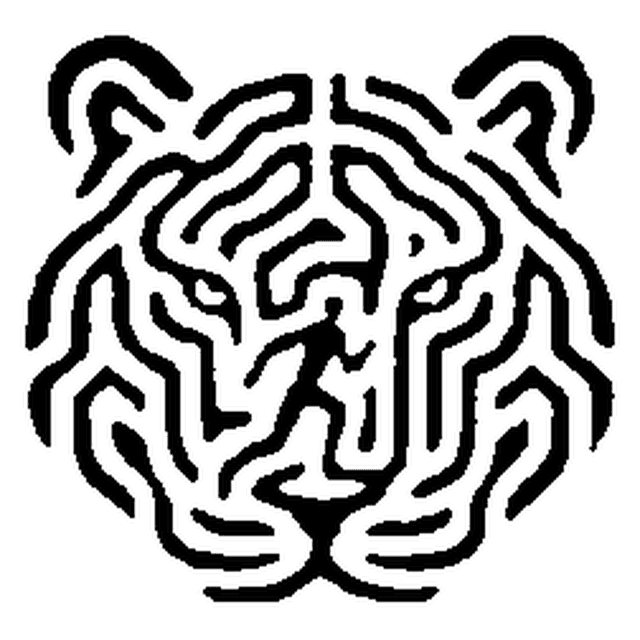
Why Tiger Hunters
The story behind Freedom Run 4.0
Last year our medals carried Alla Horska's Boreviter — a bird drawn by an artist the Soviet system silenced. This year we've followed the same thread to a novel: Ivan Bahrianyi's Тигролови (Tiger Hunters).
Bahrianyi was arrested in 1932 for what he wrote, exiled to the Soviet Far East, and escaped. He was caught again, released with his health broken, and left Ukraine for good after the war. He died in Germany in 1963 without seeing it again. He wrote Tiger Hunters in 1944.
The novel opens with a twenty-five-year-old engineer throwing himself from the window of a moving prison train into the taiga. Half-dead, he is found by the Sirkos — a family of Ukrainian settlers living thousands of kilometres from Ukraine, who have kept their language, their songs and their carols for two generations in a place nobody would think to look for them. They make their living hunting tigers. They take him in. By the end of the book, the man who was prey has turned on the man hunting him and crossed the border out.
What it means for us
It is a story about running. Not as a metaphor. The novel is pursuit and endurance across a landscape, and all of it turns on one man’s body carrying him further than anyone expected it to.
It is about Ukrainians a long way from Ukraine, staying Ukrainian. The Sirkos kept a Ukrainian life going at the edge of the world, without ceremony and without asking permission. That is a recognisable thing to anyone standing on a start line in a London park on a Sunday morning in October.
It is about being taken in by strangers. Hryhoriy survives because a family who owes him nothing feeds him, hides him and gives him work. Everything a charity run does is a version of that. So is everything our partner organisations do — for wounded soldiers, for children with cancer, for families who have lost their homes.
And it is about courage as ordinary work. Hunting tigers is the Sirkos’ job. They get up and do it.
The title carries the whole argument. Whatever is hunting you, you are not obliged to accept the role of prey.
The most important line
«Сміливі завжди мають щастя» — the brave always have luck.
There is no promise that things turn out well. We read it as an instruction instead. Luck arrives for the people who are already moving.